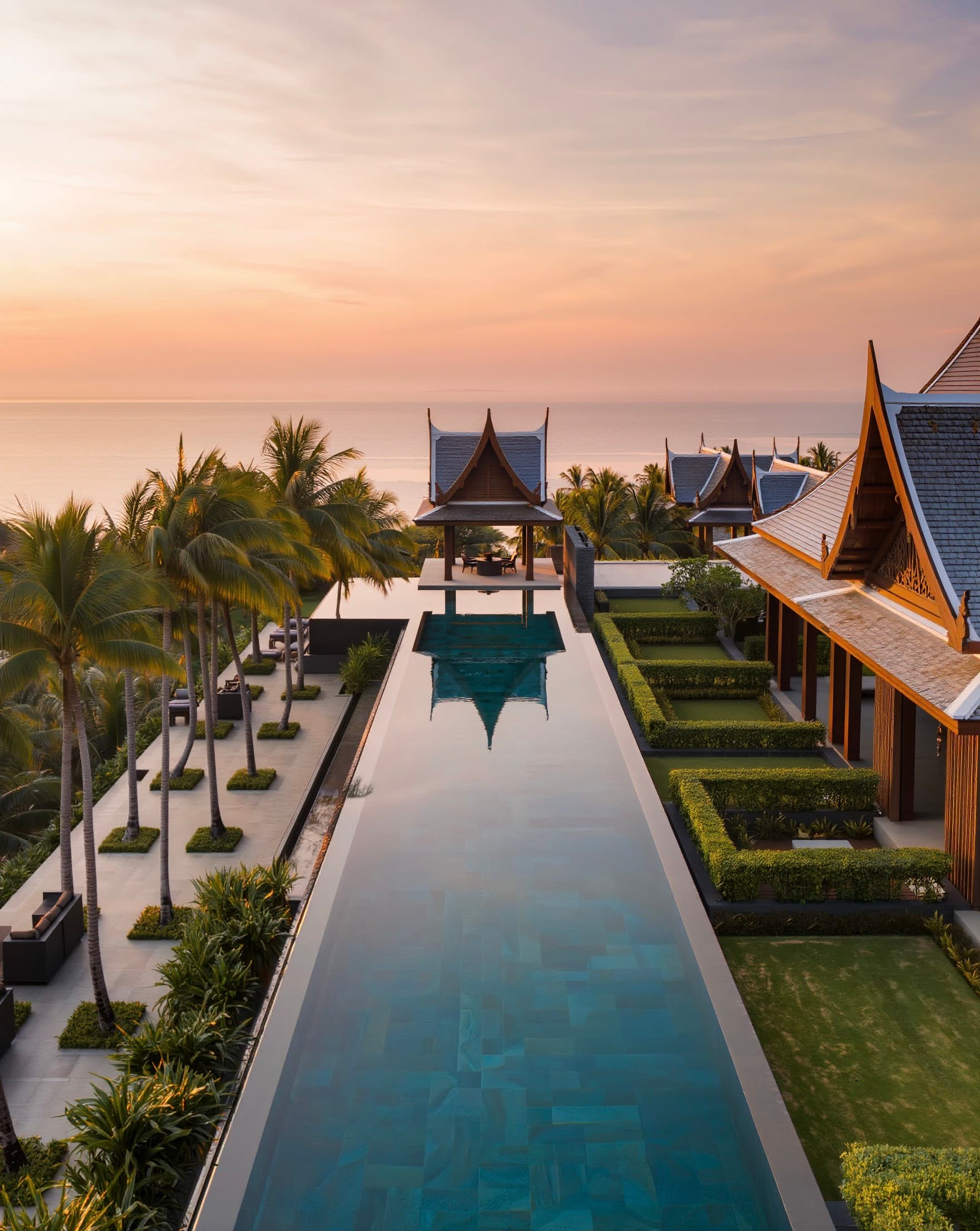
A clear 2026 guide for GCC investors on what foreigners can legally own in Thailand, including condo quotas, leasehold limits, landed-property structures, taxes, visas, and due diligence.
For investors who have built positions in Dubai over the past decade, the appeal of Thailand is no longer abstract. Bangkok and Phuket offer rental yields that compete with, and in some segments exceed, what stabilized Dubai assets now deliver. Pair that with a depth of lifestyle, healthcare, and visa infrastructure that few markets in the region can match.
The question that consistently stops GCC investors at the doorway is not whether Thailand is interesting. It is whether they can legally own what they are about to pay for.
The short answer is yes, but the rules are specific. The distinction between what foreigners can and cannot own in Thailand is the single most important thing to understand before any capital moves. This guide walks through those rules clearly: what you can own outright, what requires a structure, what proposals are circulating in 2026, and what to verify before you sign anything.
Thai real estate for international investors has moved from a niche interest to a recurring line item in the GCC family-office playbook. Three forces are driving this: portfolio diversification away from Dubai-only allocations, the structural recovery of Thailand's tourism economy, and a widening visa framework that makes long-stay ownership practical for the first time.
Bangkok's prime condominium segment has seen sustained interest from Middle Eastern buyers, particularly in branded residences and projects positioned near the BTS Sukhumvit corridor. Phuket and Koh Samui have absorbed a noticeable share of villa demand, where rental yields in tourist-driven zones routinely sit above what comparable assets achieve in established Mediterranean or GCC leisure markets.
None of this matters, however, until you know what you are legally allowed to hold.
The one rule that shapes everything: land versus building
Under Section 86 of the Thai Land Code, foreign nationals cannot directly own land in Thailand. This is not interpretive. It is statutory, and Sections 111 to 113 of the same code impose criminal penalties, up to two years' imprisonment, for violations through nominee structures.
But Thai law treats buildings as separate from the land beneath them. A foreigner cannot own the plot a villa sits on, but can own the villa itself through a registered superficies right. A foreigner cannot own the land a condominium tower occupies, but can own a unit inside that tower outright.
Every ownership pathway that follows is built on this distinction.
Understanding it upfront prevents the most common mistake international buyers make: assuming that because they signed a contract and paid in full, they own the land. They do not, and structuring the deal as if they do creates exposure that surfaces years later when the asset is sold, inherited, or refinanced.
Condominium ownership: the straightforward path
Buying a condominium unit is the cleanest, lowest-friction way for a foreign investor to hold Thai real estate. Ownership is freehold, registered in your own name, and protected under the Condominium Act of 1979.
The 49 percent foreign quota rule
Each registered condominium project in Thailand operates under a 49 percent foreign ownership cap, calculated by total sellable area. Once 49 percent of a building's saleable square meters is held by foreign nationals, no additional foreign-quota units can be sold to non-Thais in that project.
In practice, this means quota availability needs to be verified before you commit. Reputable developers and brokers will produce a juristic letter from the building's management confirming current quota status. In high-demand projects, particularly resale-stage Bangkok condominiums and well-located Phuket developments, foreign-quota units often command a premium over Thai-quota units in the same building because of this scarcity.
Proposals to raise the quota to 75 percent in designated zones have been under government discussion since 2024. As of early 2026, the 49 percent cap remains the operative rule, and any project marketing units on the assumption of a higher quota is operating ahead of the law.
Fund transfer requirements (the FET form)
Purchase funds for a foreign-quota unit must be remitted into Thailand from abroad, in foreign currency, and converted to Thai baht inside Thailand. The receiving Thai bank issues a Foreign Exchange Transaction form documenting the inbound transfer, and this document is required at the Land Office to register the title in a foreigner's name.
For GCC investors wiring from UAE banks, this is straightforward but worth coordinating in advance. Funds remitted in baht, or transferred from a Thai-domiciled account, do not qualify and will block the title transfer at the registration stage.
Owning landed property: three legitimate structures
Villas, townhouses, and any property where the building sits on its own plot of land fall outside the condominium framework. There are three legally established ways for a foreigner to hold this kind of asset, each with different protections and trade-offs.
Long-term leasehold
The most common structure for foreign-held villas is a registered lease of the land for a maximum enforceable term of 30 years. The lease is recorded at the Land Office against the title deed, and the building on the land can be owned separately by the foreign tenant through a superficies right.
Marketing materials often promise 30 plus 30 plus 30 arrangements, a 30-year lease with two automatic renewals stretching to 90 years. Take this language seriously, but read it carefully.
In March 2025, the Thai Supreme Court invalidated automatic 30 plus 30 plus 30 renewal structures, ruling that lease renewals beyond the initial 30-year term are contractual promises, not enforceable property rights. They depend on the landowner, or the landowner's heirs, agreeing to renew when the time comes.
A separate government proposal to extend the maximum lease term to 99 years has been circulating since 2024. It has not been enacted as of early 2026. Any project advertising a guaranteed 99-year lease today is either misrepresenting the law or relying on an unregistered side agreement that will not hold up in a Thai court.
Thai company ownership
Foreign investors sometimes hold landed property through a Thai limited company in which they hold a minority shareholding (typically 49 percent) alongside Thai shareholders holding the remaining 51 percent. The company owns the land; the foreigner controls the company through voting rights, preferential share structures, and directorship.
This structure is legal when the Thai shareholders are genuine business partners with their own capital and economic interest. It is illegal, and increasingly enforced against, when the Thai shareholders are nominees holding shares on the foreigner's behalf.
Since 2024, Thai authorities have conducted an active crackdown on nominee structures, with investigations reaching tens of thousands of companies suspected of being set up purely to circumvent the land ownership prohibition.
For Vartur's GCC clients, the practical guidance is consistent: company structures are appropriate for genuine commercial use cases, not as a workaround to own a personal villa. The legal exposure is real, and the enforcement environment is the strictest it has been in two decades.
Thai spouse ownership
Land can be registered in the name of a foreigner's Thai spouse, with a Land Office declaration that the funds used to purchase the land are the separate property of the Thai spouse. This protects the marital property regime but does not give the foreign spouse direct ownership of the land.
This structure works for genuine family situations. It is not a planning tool for unrelated parties and carries the same nominee risks if misused.
Taxes, fees, and ongoing costs
The transaction costs of buying Thai property are moderate by international standards but not negligible.
At registration, expect a transfer fee of 2 percent of the appraised value (typically split between buyer and seller by negotiation), a specific business tax of 3.3 percent if the seller has owned the property for less than five years, and stamp duty of 0.5 percent where business tax does not apply. Withholding tax on the seller's gain is also applied at registration.
Ongoing costs include condominium common area fees (charged per square meter monthly), an annual land and building tax introduced in 2020 that applies to residential property above certain thresholds, and rental income tax for owners who let their units.
Non-resident owners are subject to Thai withholding on rental income, and depending on the GCC investor's home tax position, additional reporting may apply in the country of residence.
These are not deal-breakers, but they should be modeled into the yield calculation before any commitment, not discovered after closing.
Visas that make ownership easier (but are not required)
A common misconception is that a long-stay visa is needed to buy Thai property. It is not.
Foreigners can purchase a condominium unit or enter into a registered lease without any Thai visa at all. What visas do is make ownership livable, extending the time you can stay, simplifying banking and tax residency, and in some cases easing the practical mechanics of property management.
Two programs are particularly relevant to GCC investors.
The Thailand Privilege Visa, formerly the Elite Visa, is a multi-year membership program offering long-stay privileges, airport services, and concierge support. Tiered pricing starts from approximately 900,000 THB.
The Long-Term Resident (LTR) Visa is a 10-year renewable visa for high-income earners, wealthy global citizens, and skilled professionals. It requires demonstrated assets or income and offers tax advantages on certain foreign-sourced income.
Neither visa grants land ownership rights. The 49 percent condo quota, the lease term limits, and the land prohibition apply identically whether you hold a tourist stamp or a 10-year LTR. Visas are a livability tool, not an ownership tool.
Due diligence before you sign
The single most consistent reason foreign buyers run into problems with Thai real estate is skipped or compressed due diligence. The market rewards patience here.
Before any contract is signed, three things should be verified.
First, the title deed type and authenticity. Chanote (Nor Sor 4 Jor) is the highest form of Thai title and the only deed type a foreign buyer should accept for a meaningful transaction. Lesser deeds carry boundary, ownership, and transferability risks that are not always visible on paper.
Second, the developer track record and escrow status, particularly for off-plan condominium purchases. New rules from the Office of the Consumer Protection Board, effective January 2025, strengthen buyer protections against deposit confiscation on off-plan units, but only if the contract is structured to claim them.
Third, independent Thai legal counsel. Not the developer's lawyer, not the broker's recommended firm if there is any commercial relationship between them, and not a translation service marketed as legal review. Independent counsel is the single most cost-effective protection in any Thai property transaction.
Where to start
Thai real estate for international investors is a market that rewards clarity over speed. The rules are workable, the assets perform, and the legal pathways for foreign ownership are well-established, provided the structure matches the asset and the documentation is verified independently.
If you are evaluating a specific project, a market segment, or a structure for a planned acquisition, the next step is a no-obligation consultation with Vartur's Thailand team.
We work with GCC investors daily, understand the questions you are likely to ask before you ask them, and can pair on-the-ground market access with the legal coordination required to close cleanly.